ISCAP Proceedings: Abstract Presentation
2026 Updates for Teaching Project Management: Return of the Process Groups, New Hoops for PMI Exams
Daniel Rush
Boise State University
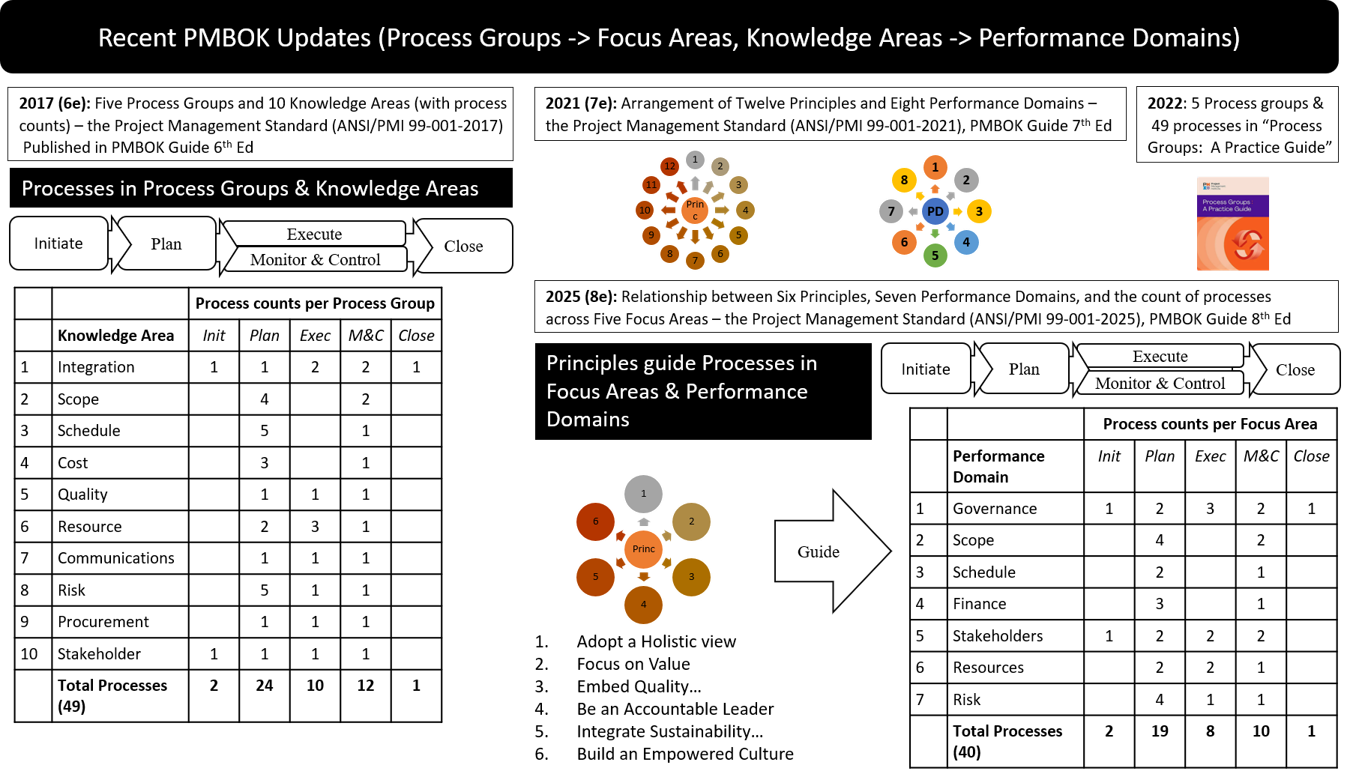
AbstractProject management instructors who strive to keep their content current and aligned with industry practice may be interested in the changes that the Project Management Institute (PMI) made to their most recent, eighth edition of the PMBOK guide (PMI, 2025) as well as restrictions that were put on which in-person courses qualify as educational hours required to sit for PMI certification exams (CAPM and PMP). This presentation will summarize the many changes (mostly improvements) that were made over the PMBOK seventh edition (PMI, 2021), summarized in Figure 1, as well as discuss proposed updates to the PMP & CAPM exam prerequisites. There are several reference frameworks to teach project management, but the popularity of the Project Management Institute’s (PMI) Project Management Professional (PMP) certification makes their vocabulary and conceptualization of projects one of the more widely used. This conceptualization has been codified in the Guide to the Project Management Body of Knowledge (PMBOK), which has undergone eight iterations since the first PMBOK in 1987. In the seventh edition of the PMBOK, released in 2021, the PMI switched from representing projects as forty-nine (49) processes in five (5) process groups across ten (10) knowledge-areas to a principles and performance domain conceptualization. The processes and process groups that were foundational to the sixth edition of the PMBOK guide (PMI, 2017) were split off into their own publication (PMI, 2022), available on pmistandards.org. The eighth edition of the PMBOK guide, first released in October of 2025, reincorporates the five (5) process groups under the name 'Focus Areas,' and reintroduces forty (40) non-prescriptive processes into the PMBOK guide. It also pares the number of principles, which describe a project manager's mindset and behaviors, from twelve (12) to six (6), and reduces the number of performance domains from eight (8) to seven (7). By eliminating duplication that existed in the seventh edition between principles and performance domains, the PMI has re-created the conceptually- and pedagogically-convenient intersection of focus areas and performance domains, reminiscent of process groups intersecting knowledge areas. In addition to these PMBOK changes, a new version of the PMP exam was implemented in July 2026, and the education requirements to sit for the exam were announced to be changing in October 2026. For instructors that want their students to be conversant with PMI terminology and certifications, and especially for those that updated their courses to accommodate the substantial changes present in the PMBOK 7th edition, this presentation is meant to provide a brief summary of the changes and several possible responses to each, as well as invite discussion on how to prepare interested students to sit for the CAPM and PMP since most in-person university courses would no longer qualify towards the 35 educational hours under the PMI's latest proposal.